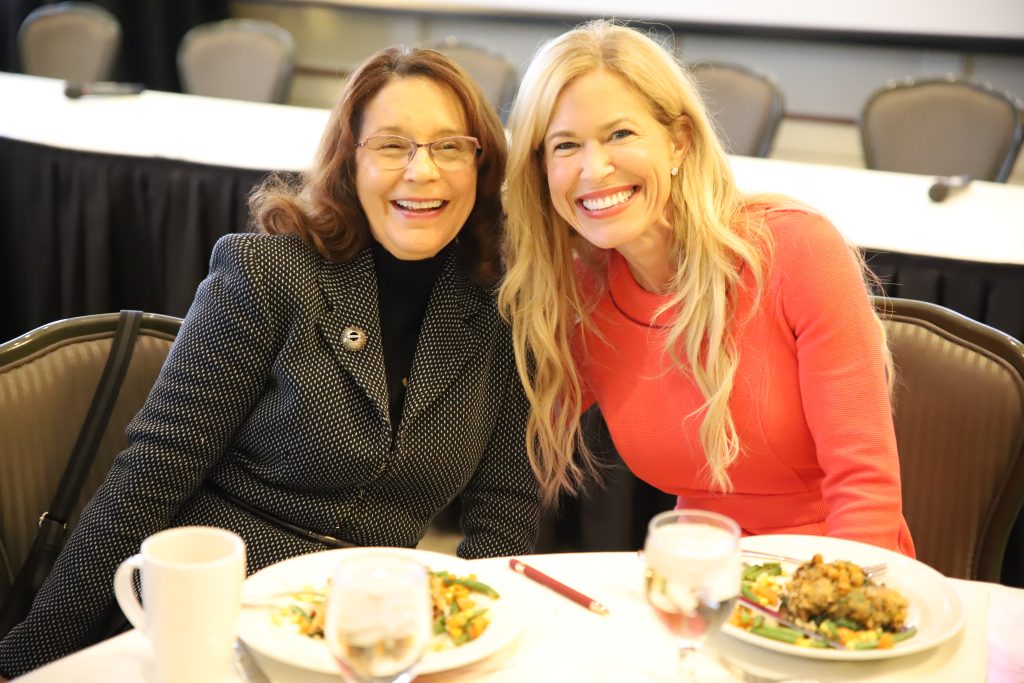
Every spring in Minneapolis, just as the sun starts to warm us up, Compassionate Action for Animals brings you a different kind of heat: the popular Vegan Chili Cook-Off. This year marked our 15th year hosting the event and saw six competitors vying for the title.
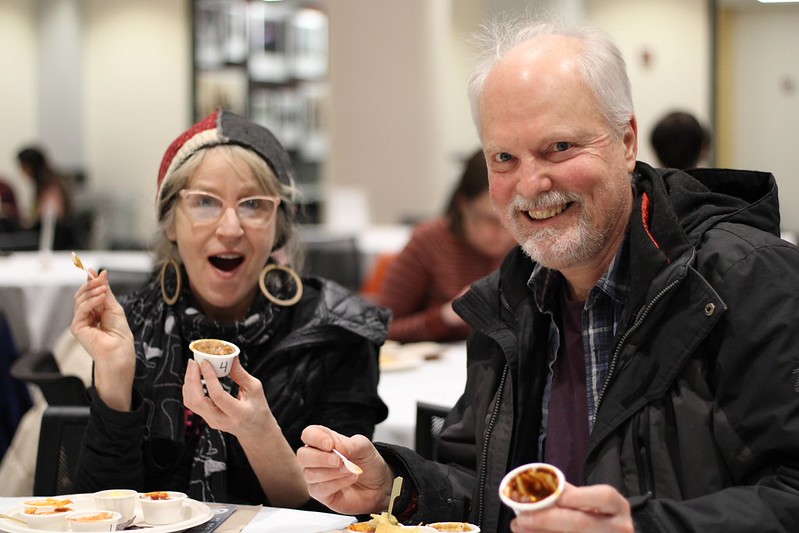
The annual competition brings together talented chefs, restaurants, and food businesses to present their chili recipes to families, students, and community members. Attendees get to sample all of the chili options and vote for their favorites. It’s a fun way to celebrate just how delicious plant-based food can be and one of the best vegan events in the Twin Cities year after year.
A Tour of This Year’s Chili Bowls
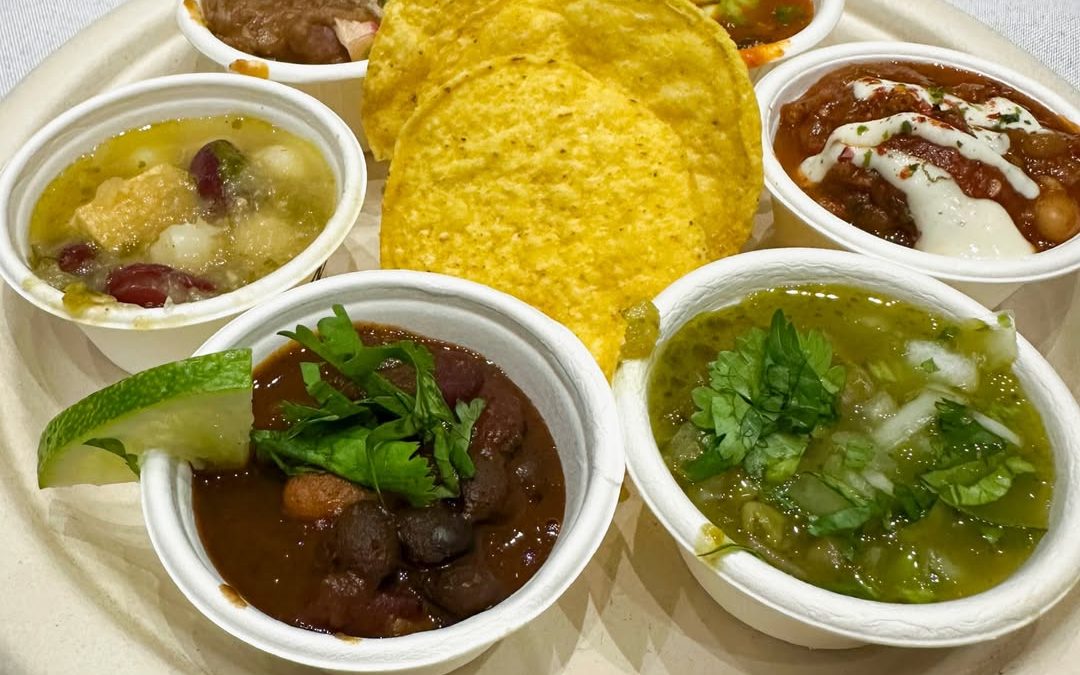
Chili resists a single definition. Is chili defined by its tomato bases, its spices, its beans, or something else? (We sure know it’s not defined by animal meat!) Every community and every cook has their own take on chili. Our contestants utilized that open definition wonderfully, bringing to the competition a wide variety of chili recipes with different flavors, textures, spices, and ingredients.
It’s amazing just how many different recipes and flavors emerge at a chili contest, because everyone has their own unique spin and secret ingredients. Let’s take a closer look at the six competitors from this year’s Cook-Off, and what made their chilis special.
Hard Times Cafe
The team from Hard Times Cafe served up a hearty, savory green chili packed with hominy and tofu. Diners said “the hominy in it blows it out of the water,” and “the tofu really soaked in the flavor” of their tomatillo with a touch of lime salsa verde. As one person put it: “loved it!! hope to see it as a soup option at the restaurant.” And we’ve got good news – it is! Stop by the cafe to see what’s on offer with their rotating soup selection, and give them a follow on Instagram at @hardtimescafempls.
Vegan Witt
Chef Witt of Vegan Witt brought to the competition his creamy, rich, bean-y, Creole-inspired chili. Diner feedback included: “really rich & creamy,” “thick as heck, good taste,” and “perfectly hearty — it was creamy, yummy, just scrumptious.” Diners often noted the chili’s accompanying vinegary slaw, with one attendee declaring: “wish I could get like 50% slaw,” wanting more of this delicious garnish. You can find more from Vegan Witt at local pop-ups and markets. Follow @veganwitt on Instagram for the latest info.
Reverie Cafe + Bar
Reverie Cafe+Bar also joined this year’s Cook-Off with their dark, smoky mole poblano chili. “Unquestionably my favorite. Strong, rich, deep chili flavor. Proper amounts of each ingredient. Well done all around!” wrote one enthusiastic attendee. Others raved about the hint of chocolate in the mole: “I loved how smokey it was, with the sweetness of chocolate — I love a dark chili. Above and beyond. Great, warms the bones.” And our favorite comment: “Holy mole this one was good.” Visit their Minneapolis cafe to try out their full menu and follow their Instagram for more updates @reverie_mpls.
Dreamstate Cafe
Newcomers Dreamstate Cafe came ready to bring the heat with their chili recipe. The Dreamstate team presented a Tex-Mex chili that was spicy, sweet, and warm. Their avocado crema topping set the spiciness off perfectly with its cool, lush, and creamy richness. One attendee noted “The flavor was amazing,” while another said, “Loved this! A perfect solid flavor profile. A little spicy, which was perfect!” This delicious chili was definitely a crowd-pleaser, earning rave reviews. You can try out their full menu at the all-new Minneapolis cafe and find them on Instagram @dreamstatecafe for the latest info.
Salsa a la Salsa
Known for their authentic Mexican offerings, Salsa a la Salsa cooked up a fresh and crisp chili verde for the contest. Their recipe was filled with mushrooms and tomatillos and finished with an onion-cilantro topping. “Diced mushrooms are AMAZING in this chili! It was a wonderful texture,” wrote one attendee, while others celebrated its freshness: “tasted very fresh and clean! Love green chili!!” and “so delicious, I want a big bowl.” This was a bright, herb-forward chili that impressed our diners. Find their other fresh Mexican food offerings at the Midtown Global Market and give their Instagram a follow @salsa_a_la_salsa.
Food on the Fly
The Food on the Fly team presented their spicy, complex chili that featured their delicious plant-based meats, made in-house! Their unique Korean-spice-infused chili showed off bold, layered flavors and inventive use of protein — one attendee called it “10/10, absolutely no notes, could eat this every day,” while others praised the “perfect solid flavor profile” and the “amazing texture.” The blend of ingredients drew appreciation for its creativity: “thought the blending of Korean flavors was really unique and well done.” Stop by their downtown Minneapolis kitchen for lunch, and follow their next moves on Instagram @foodontheflymn.
🏆 And the Winner Is… Drumroll Please
The competition was stiff with so many amazing chili options to choose from. Six professionals showed off their chili-making chops in the 15th annual Vegan Chili Cook-Off, but only one could be crowned the winner. Event attendees delighted in sampling all six recipes and casting their votes for their favorite.
Congratulations to Dreamstate Cafe!
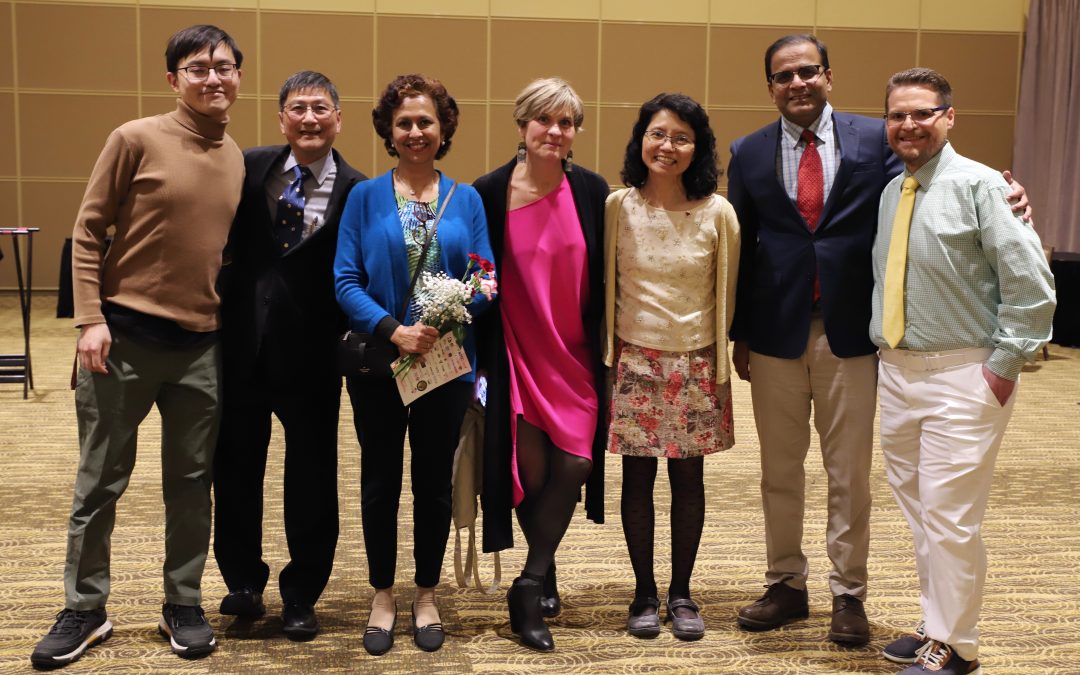
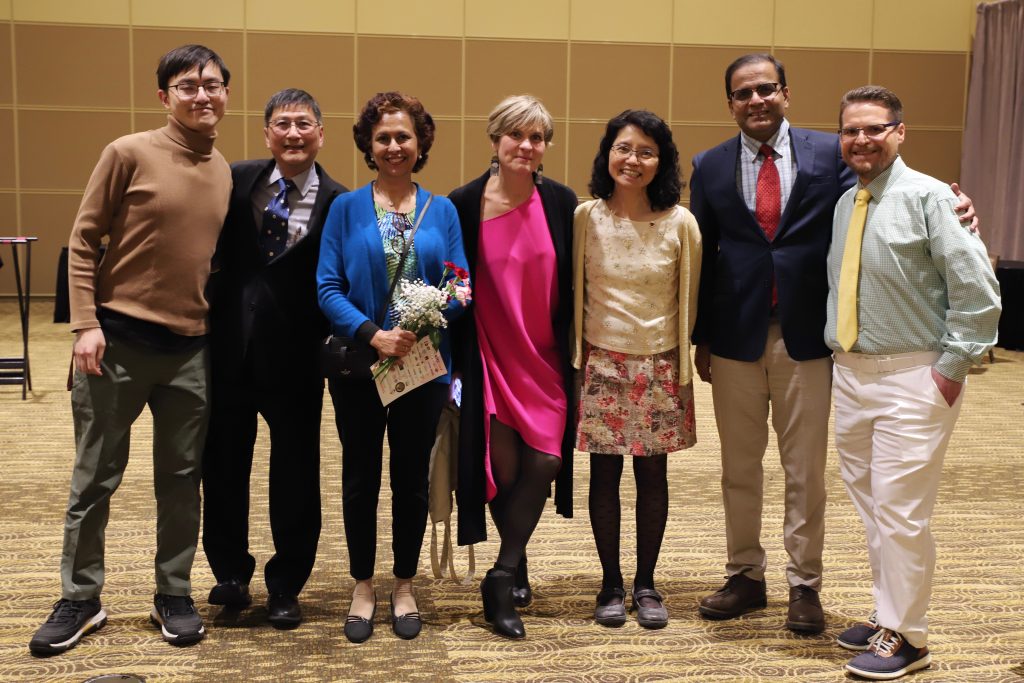
Once all the votes were tallied, the winner was announced at the end of the event. The team from Dreamstate Cafe nabbed the top honors and took to the stage to accept their trophy. While all of the chili competitors received rave reviews from tasters, Dreamstate’s Tex-Mex recipe with its avocado crema was the fan favorite, getting the most votes.
Dreamed up by the same team behind Powderhorn’s Reverie Cafe + Bar, Dreamstate Cafe opened this winter on Lyndale Avenue and made a great debut in their first Vegan Chili Cook-Off competition.
If you haven’t made it to Dreamstate Cafe yet, consider this your cue! Find them at 2558 Lyndale Ave S., Minneapolis, open daily until 10pm. Go try out their menu of plant-based cafe classics like burgers and sandwiches and inventive new dishes like a mushroom scallop linguini and more that are not to be missed!
Why Host a Vegan Chili Cook-Off?
The annual Vegan Chili Cook-Off makes plant-based eating joyful, accessible, flavorful, and delicious. The variety of delicious, crowd-pleasing chili recipes showcase how animal-based ingredients aren’t necessary to create nourishing, flavorful dishes that wow. Even meat-eaters are impressed with these vegan chilis year after year.
And this is why we host this annual event and why all of the chilis are plant-based. There’s a growing body of research on why choosing plant-forward foods is good for the planet, for you, and, of course, for animals. And this event shows just how easy it is to enjoy plant-based recipes.
Decades of studies consistently show that plant-based diets are associated with a lower risk of heart disease, type 2 diabetes, obesity, and cancer. In addition, moving from a typical Western diet to a plant-based diet reduces our carbon footprint dramatically — by up to 75%. And plant-based diets spare animals the indignity, terror, and pain of being separated from their social groups, genetically manipulated, confined, and horrifically killed — tragedies ever-present in animal farming.
Events like the Vegan Chili Cook-Off are one of our favorite reminders that eating plant-based is also just… really, really good, with innumerable options available to fit every palate and fill every bowl.
What People Were Saying About the 2026 Vegan Chili Cook-Off
This year’s Vegan Chili Cook-Off was a smashing success. Our competitors presented their very best inventive and delectable chili recipes, and attendees were wowed by the results. It was a fun event and a great way to connect with other like-minded individuals. But don’t just take our word for it. Check out what this year’s enthusiastic attendees had to say about their experiences:
“Love that this event exists — thank you!! Learned about a few new restaurant options.”
“Very well organized and very tasty chilis! Tortilla chips are a nice touch”
“BEAUTIFUL EVENT.”
“Loved this! A perfect solid flavor profile. A little spicy, which was perfect!”
“Great organization this year, appreciate the compostable dishes. Most of my favorite restaurants were here and a few I hadn’t heard of.”
“Love the cook off!!!! Thank you!!”
“Great event and people. Nice to see so many vendors that provide vegan options. I love vegan food!”
It’s easy to see that the Vegan Chili Cook-Off is a hit with our attendees and one of the best events in Minneapolis annually. Attendees and competitors alike rave about the fun they had participating in the Cook-Off and the opportunity to sample so many amazing chili recipes in one place. If you missed this year’s competition, join us next year for more inventive chili recipes and see who’s competing for the title of best chili! With some of the Twin Cities’ best plant-based talent in one room, it’s an event not to be missed.
A Heartfelt Thank You
Thank you from the bottom of our hearts to all of our volunteers who gave their time and talents to the Vegan Chili Cook-Off! This event simply could not happen without your time, skill, and generosity. Special thanks to Anna, Arthur, Blake, Cam, Carl, Elizabeth, Fela, Guinevere, James, Jennifer, Julie, Keelin, Laura H, Matthew, Miles, Phil, Ronan, Sarah, Theresa, Unny, Vic, and Yao. Additional thanks to Ronan, Guinevere, and the entire student group of Compassionate Action for Animals at UMN for their work in helping to organize the event.
And of course — thank you to each of the six restaurants and chefs who competed. Bringing your best chili to this event takes effort, creativity, and a generous spirit. We are endlessly grateful for the way the Twin Cities plant-based food community comes together to create such wonderful events.
MAGNUS_JENNIFER_FIREHORSE_COPYRIGHT
Join Us at Another Plant-Based Event
While the 2026 Vegan Chili Cook-Off is a wrap, we are already looking forward to next year’s competition, as well as all the other events all year. Compassionate Action for Animals hosts a wide variety of other events, from the area’s largest vegan festival, Twin Cities Veg Fest, to smaller dine-outs at local restaurants, potlucks, documentary screenings, and other community events. Our events are always welcome to all and bring together like-minded people, whether fully vegan or just veg-curious. And no matter the season, there’s something going on at CAA. We hope you’ll join us at one of our other events soon — and we’ll see you at next year’s Vegan Chili Cook-Off to see who takes the trophy and earns bragging rights for the year. See you there!
One of the most powerful things you can do for the world is also one of the most personal: choosing what you put on your plate. And for Nicola Philpott, that idea doesn’t stop at her own kitchen table. It extends to the meals CAA prepares in community for our neighbors.
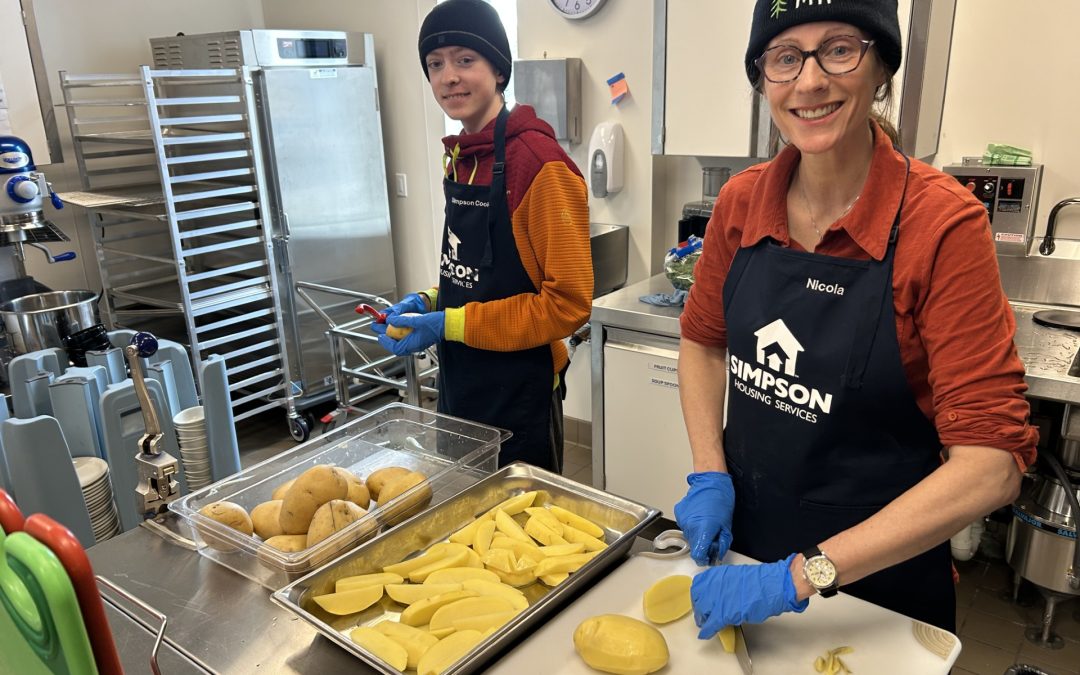
Nicola is the volunteer organizer behind CAA’s West Suburbs Vegan Potlucks and our Simpson Meals program, which brings lovingly prepared, fully plant-based meals to guests at Simpson Housing Services. Simpson provides shelter for neighbors experiencing homelessness.
This year, thanks to Nicola’s leadership and support from volunteers and donors, the program has expanded to include meal service at a second shelter. Starting in March of this year, our volunteers also provide a monthly plant-based meal at the local Sojourner domestic violence shelter.
All About Nicola
Along with her family, Nicola moved back to the Twin Cities after 12 years in Michigan and since then, has participated in many CAA events. When planning her family’s move here, Nicola immediately searched for a veg fest in the area. She found our Twin Cities VegFest and got excited to connect with CAA.
One of the first events she attended was the July 4th Vegan Potluck and she loved it so much she decided to become more active with CAA. She also loves attending and getting involved with the Twin Cities Vegan Bike Crawl, the Twin Cities Vegan Chef Challenge, Twin Cities VegFest, and the ThanksLiving Potluck. Nicola credits CAA for ensuring the Twin Cities is a thriving vegan hub and appreciates its other fun community and volunteer events.
In her first volunteer role with CAA, Nicola helped organize and serve a lunch at Simpson Housing Services. The event welcomed 25 people experiencing homelessness with a tasty plant-based meal. “It was so rewarding to see shelter guests enjoying our food!” she said.
Nicola loves to cook and share the plant-based food she makes with others. This is a core part of her activism. She appreciates that CAA activities allow her to do what she loves while advocating for farmed animals. Her favorite cookbooks include “Isa Does It” and “Vegan Cookies Invade Your Cookie Jar.” Both are by Isa Chandra Moskowitz. Per Nicola, “I’m not going to give up comfort food just because I’m vegan!”
She is also a climate activist and co-leads the MN West Suburbs chapter of Citizens’ Climate Lobby. For Nicola, going vegan has been the easiest, cheapest, and most impactful climate action she has taken. She believes that, “We won’t solve the climate crisis without changing the way we eat.”
A Growing Meal Program and a New Home for Simpson Housing Services
Nicola was instrumental in starting up CAA’s meal at Simpson Housing Services. Thanks to her organizing, the program started serving one meal a month in 2024. These events consistently receive a warm reception from shelter guests and staff. Generous financial support from CAA donors keeps this program running — along with strong volunteer interest. Often, the volunteer spots for these meal service events are full before we can even advertise them. It’s clear that this initiative is popular all around!
Since those early days in 2024, the program has grown. Today, because of Nicola’s help and with backing from our supporters, CAA volunteers now prepare and serve three meals every month to Simpson guests and Simpson’s own weekly meal planning has evolved to accommodate more plant-based meals.
Earlier this year, Simpson opened a wonderful new Minneapolis location, also in the Whittier neighborhood of Minneapolis. The gorgeous new building is flooded with natural light, creating an environment that feels welcoming and dignified from the moment you walk through the door. Nicola and her crew of CAA volunteers have settled right into this bright new space, bringing their own warmth to match it. The new dining room sports menu screens that display information about the benefits of plant-based foods during meal services. Guests and volunteers love all the new features of the improved space.
Weekly Vegan Meals — Even When CAA’s Not There
Under Nicola’s leadership, the Simpson Meals team has built up an impressive repertoire of recipes — stuffed peppers, vegetable coconut curry, minestrone, chili, and casseroles, along with healthy sides like salads and fresh fruit. Guests have noticed the quality and deliciousness of these meals that fill everyone’s need for nourishing, healthy, tasty food. The meals help to accommodate different guests’ need for halal, kosher, ital, vegetarian, or vegan meals, making them inclusive to a greater variety of guests.
The response to CAA’s plant-based cooking at Simpson Housing Services has been positive enough that Simpson itself now incorporates at least one fully plant-based meal into their regular weekly rotation — regardless of whether CAA volunteers are in the kitchen that day. This shows just how easy and influential it can be to share plant-based cooking with others and create lasting change, one meal at a time.
A New Monthly Partnership With Sojourner Shelter
The successes at Simpson Housing Services got Nicola thinking about ways to expand the program even further and provide delicious and healthy plant-based meals to other neighbors too. An opportunity arose with Sojourner Project and Nicola was inspired to help out there too, offering the same dignified, nourishing, plant-based meal experience to new guests at a new location.
The Sojourner Project is a local organization that provides a secure domestic violence shelter. According to their website, “Sojourner’s mission is to provide emergency shelter, support, and legal advocacy services to those victimized by domestic violence and other forms of interpersonal violence.”
“The shelter is a secure, temporary emergency residence for women and their children, unsafe in their own homes due to violence and abuse. The shelter provides programming and services designed to promote healing and assist residents with personal planning to achieve increased safety for themselves and their children. Support and life skills groups, children’s programming and transportation assistance enhance individualized case management services. Transition support is also available to assist residents as they re-enter the community.”
Serving at a secure shelter like this requires additional care and coordination. Volunteering for the Sojourner vegan meal program requires a regular commitment to meal prep on the fourth Tuesday of each month, from 3pm – 5:30pm.
If you have volunteered for the Simpson meals program or other CAA programs and are interested in this new program, reach out to the CAA team.
Climate & the Kitchen
Nicola’s commitment to plant-based food runs deeper than just good recipes. She’s been an active member of Citizens’ Climate Lobby for 9 years, bringing a climate activist’s lens to everything she does — including her work with CAA. Feeding people well, reducing harm to animals, caring for the planet — it all flows from the same place.
Together with fellow volunteer Anna Larsson, Nicola presents From Fork to Forest, an engaging educational presentation on plant-based eating and its connection to environmental health. The From Fork to Forest presentation makes the case that our food choices are a necessary piece of the climate change solution. Anna and Nicola have provided this informational program at schools, churches, and events, inspiring hundreds of attendees to try more plant-based meals.
Nicola and Anna also played a key role in organizing the Twin Cities’ first Eat for Impact initiative under the umbrella of CAA’s Wholesome Minnesota program and in partnership with the organization Planted. During this program, nine restaurant locations each added two new plant-based dishes to their menus for the month of March! Numerous environmental and social justice groups, as well as government leaders, participated by endorsing the project and dining at the restaurants.
Vegan Potlucks in the West Suburbs
Around the same time Nicola was starting up the meal services at Simpson Housing, she was also dreaming of a different kind of gathering. Soon, the West Suburbs Vegan Potlucks launched, meeting once every month at Minnetonka’s Unmapped Brewing. These potlucks find people from all over the Twin Cities coming together to enjoy plant-based dishes and good company. Recipes are swapped and connections are made, all while having fun.
The ongoing monthly event at Unmapped also provides support for CAA’s other programs and missions. The potlucks have hosted vegan food drives for local pantries, as well as a special fundraising event that supported the Simpson meal service initiative. Our community keeps showing up to connect and provide for each other in meaningful ways.
How You Can Help
If Nicola’s actions have inspired you, you’re not alone. Our volunteer spots to work with Nicola at the shelters are consistently full well in advance of the event dates. But we’re always interested in finding new helpers! You can sign up to prepare and serve a plant-based meal at Simpson Housing at any upcoming available dates. If all dates are full, keep checking back in as we are always adding more event dates!
Once you register as a volunteer, we’ll message you with directions and other necessary information. Please note that due to the sensitive nature of these events, advance registration is required to volunteer.
Making an Impact Together
At CAA, volunteers drive everything we accomplish. Last year, more than 280 volunteers donated over 6,263 hours of their time — more than a $125,000 in value to CAA! They’ve also gained valuable advocacy skills, leadership experience, and lasting friendships in our community.
Read more about our collective impact in the 2024 annual report.
CAA’s Theory of Change
Our mission is to encourage people to embrace their empathy for farmed animals and move toward a plant-based diet. This drives our vision of a world where all animals, human and nonhuman, can thrive.
We grow our movement by welcoming people of all backgrounds. Through our programs, events, and activities, we create a powerful cycle of increasing awareness, building community, empowering advocates, and generating lasting change for farmed animals. This approach targets both individual and institutional change.
What kind of change do we create? Our programs reduce consumption of animal products, improve the lives of farmed animals, and benefit the well-being of all Minnesotans.
We developed this theory of change in 2017 through comprehensive community input, including an online stakeholder survey, two public town halls, and strategic planning sessions with staff, core volunteers, and board members.
Your Skills, Our Mission
Ready to turn your compassion into action? Join our community of change-makers! Explore our volunteer opportunities to find the perfect match for your interests and skills. From hands-on roles in food service, photography, and event coordination to strategic planning for Twin Cities Veg Fest and helping to manage our website, there’s a meaningful way for everyone to contribute.
Spring is here, and so is the 15th annual Vegan Chili Cook-Off — and it’s bigger, bolder, and in a brand-new venue! Six incredible Minnesota chefs will compete to earn the title of Best Chili — And you get to decide who wins!
What Is the Vegan Chili Cook-Off?
For 15 years, Compassionate Action for Animals (CAA) has hosted the Vegan Chili Cook-Off. The event brings some of the best chili recipes to the Twin Cities, featuring local professional chefs and restaurateurs. Attendees to the Cook-Off get to sample all of the chilis and help us to pick the winner by voting on their favorites.
One of CAA’s largest annual events, the Vegan Chili Cook-Off draws huge crowds and is full of fun and excitement. Where else can you sample so many of the Twin Cities’ best chilis all in one place?! Not to mention the sense of community you’ll experience being around so many like-minded people. It’s one of the best things to do in the Twin Cities!
Mark Your Calendar for the 2026 Vegan Chili Cook-Off
This year’s Cook-Off happens on Saturday, April 11, 2026 from 4:00 pm – 6:00 pm. The competition moves to a new location at the North Star Ballroom in the Saint Paul Student Center at UMN. The address is 2017 Buford Ave, Saint Paul.
For only $10, adults can get in and sample all of the chilis. Sign up for a volunteer position and get in for free! Kids and students also get free admission.
2025 Vegan Chili Cook-Off competitors
Meet the 2026 Competitors
Many competitors have accepted the challenge and presented their best chili recipe over the years. Each year, only one winner reigns supreme and earns the bragging rights of the year’s best vegan chili.
For 2026, we are so excited to announce an absolutely incredible lineup. Six local favorites have accepted the challenge and will be bringing their most delicious plant-based chili to the competition for us this year. Check out the amazing participants:
Each of these competitors are known for providing some of the best vegan food in the Twin Cities. We encourage everyone to go try out their full menu offerings because we are obsessed with all of them. These restaurants and chefs know how to do plant-based cooking right! Check them out before or after the competition for some great eats! But to sample their chili recipes, you’ll have to come to CAA’s Vegan Chili Cook-Off. These chili recipes will only be available at this event!
Big thanks to Trader Joe’s for donating chips to enjoy along with your chili!
How Does the Chili Cook-Off Work?
Chili Cook-Off attendees will make their way through the line, collecting samples of each contestant’s chili. Feel free to sit and enjoy the deliciousness! When you’re ready, you can use your smartphone (or the voting tablet at the check-in table) to rate each chili on a scale from 1-10.
Your votes help decide the winner! The contestant with the highest average rating at the end of the evening walks away with the grand prize that includes cash and a trophy!
But this event is more than just sampling the best chilis. In addition to all the great eats, the event will also feature:
Raffle prizes including snacks, gift cards, and other special items to win
Easy actions you can take for animals
Opportunities to connect with Compassionate Action for Animals and the UMN student organization Compassionate Action for Animals @ the UMN
A donation box for vegan food and hygiene items — get a raffle ticket when you make a donation of any size
Great background music
Games and activities for kids
Come and join us for an afternoon of fun and yummy eating!
Take Action for Animals — Right There at the Event
The Chili Cook-Off goes beyond just a great meal. Both CAA and CAA @ the UMN will be tabling at the event with simple, meaningful actions you can take for animals. When you stop by the CAA table, you can take a Veg Pledge, write to your representatives about animal issues, find out more about our work for animals, and so much more.
Are you a university student curious about animal advocacy? Stop by the CAA @ the UMN table to learn more about what the group is up to and how you can get involved! Whether you’re interested in making posters or making vegan tacos, there’s room for you in the group.
The CAA table will also be hosting a donation drop-off for vegan food items and hygiene products. If you’d like to contribute to the community, bring your nonperishable donations along to the event. As a thank you for your contribution, you can pick up a raffle ticket for a chance at the event’s prizes!
Volunteers Needed
The Vegan Chili Cook-Off doesn’t happen without the generous help of our community. We’re looking for volunteers to assist with transport, setup, and supply management before and during the event. If you’d like to lend a hand (and score free entry while you’re at it!), sign up to volunteer now! We’d love to have your help to make this event a smashing success.
Why a Vegan Cook-Off?
At CAA, we believe that animals have the right to live natural lives free from human harm and control. The billions of animals raised for food each year never get to experience natural lives or the ability to engage in natural behaviors. Choosing a vegan diet is a simple, direct, and powerful way to express our care for the rest of creation.
And the reasons to embrace plant-based eating go even beyond animals.
Research links vegan and plant-rich diets to significantly reduced risk of chronic diseases, including heart disease and type 2 diabetes — two of the leading causes of death in the U.S. Eating plants isn’t just good for animals — it’s good for all of us.
Meat and dairy production use an incredible amount of land and water, and emit far more greenhouse gases than plant-based foods. Every plant-based meal — including the Vegan Chili Cook-Off — is a step towards a more sustainable world.
Whether you care about farmed animals, are looking for healthy eating, addressing climate change, or just looking for some good eating, we look forward to seeing you at the Cook-Off!
An Inclusive and Family-Friendly Afternoon for All
The Vegan Chili Cook-Off is for everyone! Regardless of your age, race, immigration status, or vegan/omnivore status, you’re welcome to join us at this event.
The event is very family/kid-friendly too. Our kids’ area will be stocked with coloring books, Rubik’s Cubes, and other fun activities.
Got allergies? All competitors are asked to label any common allergens in their recipes (soy, wheat/gluten, peanuts, tree nuts, and sesame). All of the chili recipes are vegan friendly, meaning they contain no dairy, egg, shellfish, or fish ingredients.
Join Us at the 2026 Vegan Chili Cook-Off!
We hope to see you at this year’s event. It is sure to be one not to miss! Come and check out these amazing competitors for yourself and see just how delicious plant-based chili can be!
This event is organized by Compassionate Action for Animals @ the UMN, the student organization at the University of Minnesota. A very special thank-you to Ronan and Guinevere, who have been absolutely essential in pulling everything together, from advertising to floor plans.
Prep Your Microbiome Now, Then Go Deep With Dr. Will Bulsiewicz in Person at the Community of Wellness Symposium
You know that gut health matters. But maybe you aren’t exactly sure why or how to actually care for your gut microbiome. It’s connected to everything from your immune system to your mental health to how you age.
On April 9, Dr. Will Bulsiewicz — aka Dr. B — triple board-certified gastroenterologist, three-time New York Times bestselling author, and founder of The Gut & Microbiome Center for Excellence, is coming to Rochester, Minnesota to teach his session “Gut Health for Life: Unlocking Longevity and Vitality Through Your Microbiome” at the Community of Wellness Symposium.
He’ll break down the science of the gut microbiome, which he calls your body’s “hidden command center” in a way no 60-second social media video ever could.
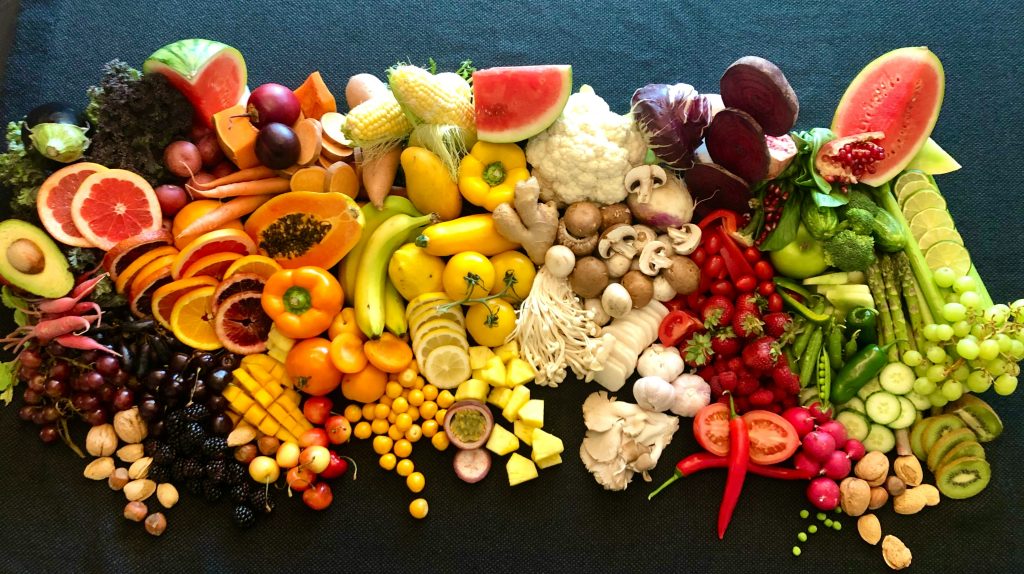
Dr. B has helped so many people (including me). To get you as excited as I am for his talk, I wanted to share a quick primer and take you on a tour of my kitchen. This is a shopping primer built around the foods Dr. B recommends for optimal gut health. Ideally you’ll attend the conference and come home ready to start feeding your microbiome the way it’s meant to be fed, but why wait? When you sit down in that conference room in Rochester, you’ll already have real-world experience to build on.
Why Your Gut Microbiome Deserves Your Attention
Before we talk about gut supportive foods, let’s talk about why this matters. (Much of what follows draws from one of my favorite Dr. B books, Fiber Fueled.)
Your gut microbiome is the trillions of bacteria, fungi, and other microorganisms living in your digestive tract. This isn’t just about digestion, it influences:
Your immune system (70% of it lives in your gut)
Your metabolism and weight (certain gut bacteria affect how you store fat and regulate blood sugar)
Your mood and mental health (the gut-brain axis is real, your gut produces neurotransmitters like serotonin)
Your inflammation levels (gut dysbiosis is linked to chronic inflammation and autoimmune conditions)
How you age (microbial diversity is a marker of longevity)
Dr. B’s approach boils down to three interconnected pillars: Diversity (30+ different plant foods per week), Probiotics (fermented foods daily), and Prebiotics (the fibers that feed your beneficial bacteria). Each pillar supports the others.
He also uses a helpful acronym, F GOALS, to make it stick:
F Fruit and Fermented
G Greens and Grains
O Omega-3 Super Seeds
A Aromatics (garlic, onions)
L Legumes
S Sulforaphane (broccoli sprouts and other cruciferous veggies)
The good news? You don’t need exotic ingredients or expensive supplements. You just need to know what to look for.
DIVERSITY: Feed Your Microbiome With 30+ Different Plant Foods per Week
One of Dr. B’s most important findings is that people who eat 30 or more different plant foods per week have significantly more diverse gut microbiomes than people who eat fewer than 10. Microbial diversity is linked to better health outcomes across virtually every measure.
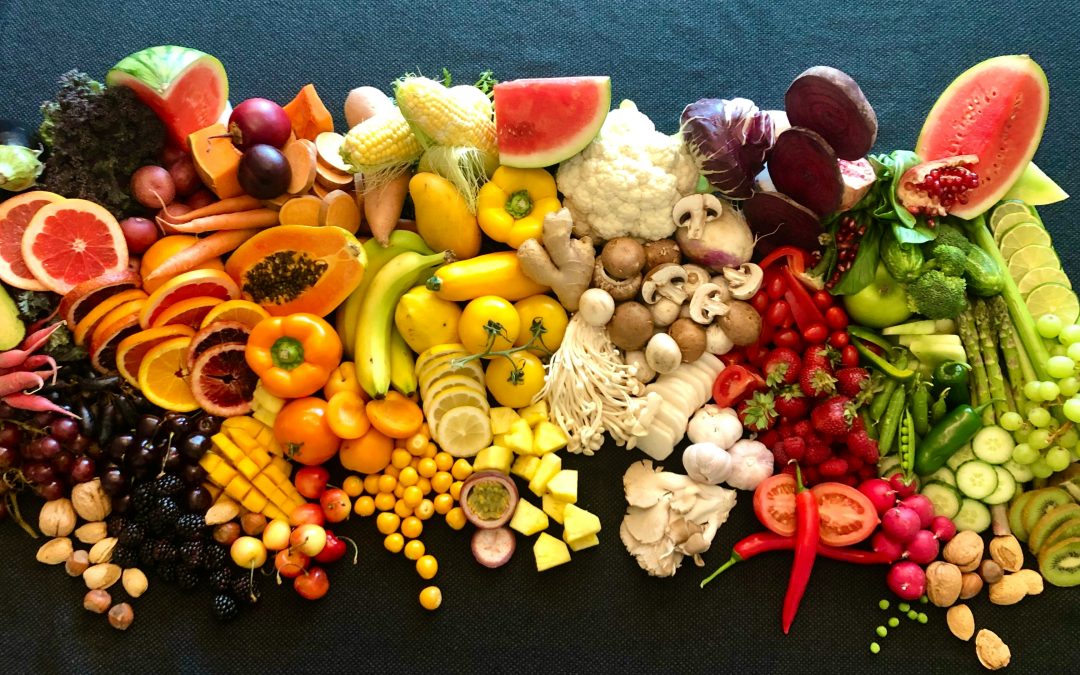
Every different plant counts — vegetables, fruits, whole grains, legumes, nuts, seeds, herbs, and spices. Basil counts. Cinnamon counts. Black beans and pinto beans count as two separate plants. I play a game with myself to see how many different plants I can get into a single meal. It’s actually fun — and something I recommend trying with kids, using ideas like the colors of the rainbow and different shapes.
Whole Grains
Most Americans cycle through the same grains on repeat white. Dr. B would really love for you to branch out. Since we live in Minnesota, the wild rice capital of the world, why not include wild rice as a grain on repeat? Look for REAL wild rice, if it says “cultivated,” “paddy” grown, or comes from California, it’s not real wild rice. Here are some truly wild brands you can trust:
Wild rice is actually a grass seed (not technically rice), packed with protein, fiber, B vitamins, and minerals. It counts as one of your 30 plants and it’s a uniquely Minnesota ingredient worth celebrating.
Other grains to rotate through: farro, quinoa, barley, steel-cut oats, millet, buckwheat. Each has a unique fiber profile and feeds different beneficial bacteria. Batch-cook 2–3 on Sunday and build bowls all week.
Jodi’s tips: Cook grains in vegetable broth instead of water for extra flavor. Batch cooked grains keep in the fridge for a week or so. Mix and match to create more diversity for your gut and palate. Check out Food52’s Vegan Wild Rice Soup by Gina Hemshaw (add brussel sprouts, it works!). This soup, made with delicious cashew cream is a hit with my kids too!
Legumes: The Fiber Powerhouses
Legumes are loaded with fiber (both soluble and insoluble), protein, resistant starch, and oligosaccharides — all of which feed beneficial gut bacteria. These include:
Lentils: red (creamy, great for soups and dal), green/brown (hold their shape, perfect for salads), black beluga (earthy, elegant)
Chickpeas: versatile, creamy, perfect for hummus or roasting as a snack
Black beans: hearty and slightly sweet
White beans: (cannellini, great northern, navy) smooth and mild, great mashed as a spread or hidden in soups to make it creamy
Keep adding a variety of other legumes like pinto, kidney, or adzuki — each type counts as one of your 30 plants for the week! Beans might cause gas at first, but that’s a sign your gut bacteria are feasting. Start with smaller portions and build up from there. Your gut will adapt.
Jodi’s tip: If beans give you gas, soak dried beans overnight and discard the soaking water. You can also cook them with a strip of kombu (a seaweed) or a pinch of asafoetida (hing). Both reduce gas-producing compounds.
Nuts and Seeds
Every nut and seed counts as a different plant too, so vary them to get the most benefits.
Seeds: chia (omega-3s, soluble fiber), ground flaxseed (grind fresh for maximum omega-3s), hemp seeds (complete protein, sprinkle on everything), pumpkin seeds (zinc, magnesium), sunflower seeds (vitamin E, budget-friendly)
Nuts: almonds, walnuts, cashews, pecans, pistachios, Brazil nuts
Jodi’s tip: I keep a jar of mixed seeds (chia, flax, hemp, pumpkin) and sprinkle it on everything. And I rotate my nut butters weekly — each one counts as a different plant.
Produce: Eat the Rainbow (and the Herbs)
Vegetables, fruits, fresh herbs, and spices all count toward your 30 plants. The more color, the better.
Stock up on: dark leafy greens (kale, collards, Swiss chard, arugula, spinach), cruciferous vegetables (broccoli, cauliflower, Brussels sprouts, cabbage), colorful vegetables (bell peppers, carrots, beets, sweet potatoes), berries (polyphenol powerhouses!), fresh herbs (basil, cilantro, parsley, mint, dill), and spices (turmeric, ginger, cinnamon, cumin, oregano, black pepper).
Jodi’s tip: Buy fresh ginger and turmeric root and keep them in the freezer. Grate them frozen directly into stir-fries, soups, and smoothies — it’s easier than peeling, and each counts toward your plant diversity tally.
Populate Your Gut With Beneficial Bacteria (Probiotics)
Dr. B recommends eating fermented foods every single day. Not a little bit, but rather a meaningful serving. Research shows that people who eat fermented foods daily have increased microbial diversity, reduced inflammation markers, and improved immune function.
Unlike probiotic supplements (which often don’t survive stomach acid), fermented foods deliver living cultures in a food matrix that protects and helps them thrive.
Sauerkraut & Kimchi: Minnesota’s Fermentation Champions
Minnesota has incredible local fermenters making small-batch, raw, unpasteurized sauerkraut and kimchi.
Fierce Ferments (St. Paul) — raw, living sauerkraut and kimchi made with organic, locally-sourced vegetables. Also, try their famous Fire Tonic (apple cider vinegar-based with garlic, ginger, horseradish, and cayenne).
Spirit Creek Farm (Wrenshall, MN) — two organic farmers from Northern Minnesota offering 19 sauerkraut flavors, plus probiotic kraut shots and hot sauces.
Kiss My Cabbage (Twin Cities) — hand-crafted sauerkraut, giardiniera, curtido, and kimchi made with farm-direct, organically grown vegetables.
How to use them: Add a forkful to lunch or dinner, stir kimchi into grain bowls, top avocado toast with kraut, or eat it straight from the jar. Important: Don’t heat it. Cooking kills the beneficial bacteria — add it to hot foods after cooking.
Jodi’s tip: Start with 1–2 tablespoons per day if you’re new to fermented foods. Work up to ¼ cup or more daily.
Tempeh: Minnesota-Made Fermented Protein
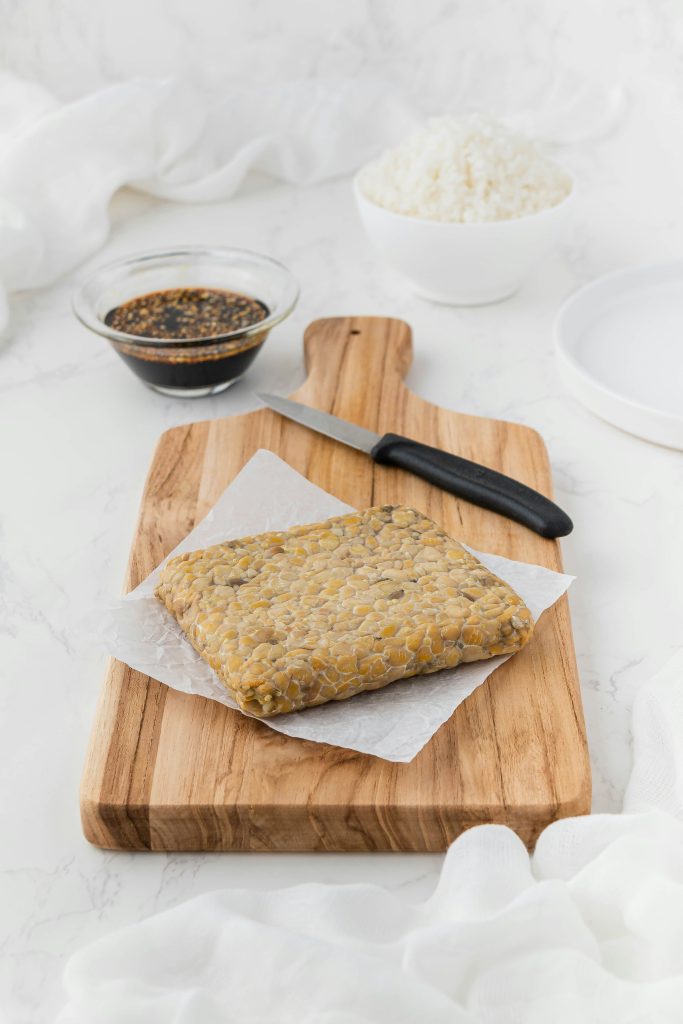
Tempeh is made from fermented soybeans which means it’s both a probiotic food AND a complete protein.
Tempeh Tantrum (Minneapolis) — East Javanese-style, small-batch tempeh, made with local, organic soybeans. They make traditional soy tempeh AND black bean tempeh.
Jodi’s tip: If you’ve tried tempeh and didn’t like the bitterness, steam it for 10 minutes before cooking. Tempeh Tantrum is naturally less bitter than most other brands because it’s so fresh.
Miso Paste
Look for unpasteurized miso in the refrigerated section.
Jodi’s tip: try my go-to Miso-Tahini Dressing: 1/3 cup tahini, 1 tbsp fresh minced ginger, 4 minced garlic cloves, 2 tsp miso paste, 1 tbsp light soy sauce, 1 tbsp rice wine vinegar, 1 tsp sesame oil, 2 tsp maple syrup, 3 tbsp water. Mix all ingredients together for a delicious topper for salads, grains, roasted veggies, and more!
Feed Your Beneficial Bacteria (Prebiotics)
Probiotics are the beneficial bacteria. Prebiotics are the fibers that feed them. Think of prebiotics as fertilizer for your gut garden. You can introduce all the beneficial bacteria you want, but if you’re not feeding them the right fibers, they won’t thrive.
The Prebiotic Powerhouses
Alliums (garlic, onions, leeks, shallots) contain inulin, a prebiotic fiber that beneficial bacteria. Sauté as a base for soups, stews, and sauces. Each type counts as a different plant.
Jodi’s tip: Chop your garlic and let it sit for 10 minutes before cooking. This allows allicin to develop which is beneficial for heart health, reducing inflammation, and much more.
Asparagus Roast with olive oil, salt, and pepper. Add to pasta or grain bowls.
Slightly Green Bananas contain resistant starch, a prebiotic that feeds gut bacteria and improves insulin sensitivity. Once bananas ripen fully, the resistant starch converts to regular starch, so go for the greenish ones.
Oats and Barley feed beneficial bacteria and support heart health.
Cooked and Cooled Potatoes offer a cool gut trick. When you cook potatoes and let them cool, the starch transforms into resistant starch, a prebiotic that feeds beneficial gut bacteria
Jodi’s tip: Make a big batch of cooked potatoes, cool overnight in the fridge, and use all week in grain bowls or salads. For maximum resistant starch, eat them cold or at room temperature.
Polyphenol-Rich Heroes
Polyphenols are plant compounds that act as antioxidants AND feed specific beneficial gut bacteria.
Berries (blueberries, strawberries, raspberries, blackberries) — both fresh or frozen work. Loaded with polyphenols and fiber, they are shown to increase beneficial bacteria.
Jodi’s tip: Frozen berries are just as nutritious as fresh and often cheaper.
Fresh herbs and spices like turmeric, ginger, cinnamon, oregano, basil, parsley, cilantro. All polyphenol powerhouses, all count toward your plant diversity goal.
Green tea is loaded with catechins (antioxidants) and reduces inflammation.
Jodi’s tip: If you’re not a tea drinker, add cooled green tea to smoothies. It’s undetectable with all the other flavors.
Track Your Plant Diversity This Week
How about a little homework before the symposium? Count how many different plant foods you eat in one week. Remember, we’re aiming for 30+. Keep a running list on your phone or a piece of paper on the fridge.
Research finds that people who ate 30+ different plant foods per week had significantly more diverse gut microbiomes than people who ate fewer than 10 and microbial diversity is linked to better health outcomes across virtually every measure.
I encourage you to start tracking and see where you land. If you’re at 15, great, now you know where to improve. If you’re at 35, amazing, keep it up.
Now when you join me at Dr. B’s session on April 9, you’ll have context and you’ll be ready to go deeper.
What You Can’t Learn From a Shopping List or Tracking Your Food
We can purchase the right foods and track our intake, but learning from Dr. B in person will really give you the why behind all of this in a way that transforms a handful of tips into a lifelong practice.
In his session you’ll learn:
How your gut microbiome acts as your body’s “hidden command center” for digestion, immunity, metabolism, mood, and aging. Dr. B will unpack the mechanisms, not just the surface-level claims.
The connection between gut inflammation and age-related diseases (diabetes, heart disease, Alzheimer’s, autoimmune conditions) and the connection to food and lifestyle
Why dietary fiber and plant diversity are non-negotiable and the peer-reviewed research that proves it
How lifestyle factors like sleep, stress, and exercise affect your microbiome and what to prioritize when you can’t do it all
The truth about supplements vs. whole foods
Practical, evidence-based strategies you can start using immediately
Dr. B is known for making complex science accessible and actionable. After his session, you’ll have the chance to ask him your questions — the ones Google can’t accurately answer for you, like:
“I have IBS, how do I add fiber without making symptoms worse?” “I’m on antibiotics, how do I protect my microbiome?” “My kid won’t eat vegetables, what are my options?”
That’s the value of being there in person. Direct access and real answers from one of the world’s leading gut health experts.
Event Details
Dates:
April 8, 2026: Early registration and pre-conference social hour
April 9–10, 2026: Full symposium
Location: Rochester, Minnesota (Mayo Civic Center area)
Can’t attend in person? Recorded content will be available for purchase after the event. But if there’s any way you can be there live, do it! This opportunity is worth it.
Your Action Plan
Go shopping this week. Buy one new grain and support local Minnesota businesses: Fierce Ferments, Tempeh Tantrum, Spirit Creek Farm, Kiss My Cabbage, and your local wild rice producers.
Start the 30-plant challenge. Track your plant diversity for one week. See how close you get to 30.
Add fermented foods daily. Start with a tablespoon or two of sauerkraut or kimchi with lunch or dinner. Work up to ¼ cup daily. Experiment with miso dressings. Make this a non-negotiable habit.
Register for the symposium. Secure your spot in Dr. B’s session. Come ready to learn.
Your gut microbiome is waiting. See you there!
About the author:
Jodi Gruhn is a board-certified health and wellness coach and advocate for plant-based living through Wholesome Minnesota and Compassionate Action for Animals. She helps individuals and communities make sustainable, evidence-based lifestyle changes that promote compassion and support both personal and planetary health.
Mark your calendars for the Community of Wellness Symposium on April 9-10, 2026 in Rochester, Minnesota. Whatever your reasons for being plant-based or plant-curious, this conference will fire up your “why.” Even the President of the American Medical Association will be there!
Maybe your “why” has to do with:
Your own health: preventing or reversing chronic disease, managing diabetes, improving gut health, losing weight sustainably
Your family’s future: setting your kids up for a lifetime of healthy eating patterns
The planet: reducing your environmental footprint through food choices
The animals: living in alignment with your ethics around compassion
Your community: fighting for health equity and food justice
My personal “why” takes into account everything listed above as I work alongside my CAA colleagues and partners to attain a plant-based option for any student who requests one in Minnesota public schools (I’ll share more about it throughout this post).
Whatever brings you to plant-based living, this symposium will equip you with the science, the strategies, and the community to make it stick and to make it matter beyond your own kitchen.
Hear from world-renowned experts in health and nutrition like Dr. Neal Barnard (founder of the Physicians Committee for Responsible Medicine), Dr. Will Bulsiewicz (bestselling author of Fiber Fueled), Brenda Davis, RD (the voice of plant-based family nutrition), Dr. Joel Fuhrman (Eat to Live), Chuck Carroll (host of The Exam Room podcast), and more.
Even Dr. Bobby Mukkamala, President of the American Medical Association, will be there. What does that tell you about the quality and credibility of this conference? To me, it signals that plant-based nutrition isn’t fringe, that it’s evidence-based medicine at the highest level.
These experts can help you personally — whether you’re optimizing your own health, supporting your family, or building your larger fight against the detrimental effects of animal agriculture on our health, the planet, and animals.
How the Community of Wellness Symposium Supports Thriving Kids
Minnesota made history in 2023 when we became one of the first states to offer universal free school meals. Every child, regardless of family income, can now walk through the lunch line and get a hot meal. In theory, that meant reduced paperwork, no stigma, and no hungry kids.
It was a monumental victory.
But for many Minnesota families, that victory rings hollow because their children still can’t eat what’s being served.
Right now, HF 2764 & SF 2970, legislation requiring plant-based meal options upon request in K-12 Minnesota public schools, are waiting for a hearing. These bills would change everything for Minnesota families. But legislators need to hear from constituents NOW.
That’s where you come in.
Our fight for plant-based school meals may extend into future legislative sessions. Or maybe you’re interested in getting plant-based into senior living, hospitals, colleges/universities or daycares. How better to arm yourself than by surrounding yourself with the world’s leading experts on plant-based nutrition as we fight for options that meet everyone’s needs?
On April 9-10, 2026, those experts will be in Rochester, Minnesota, at the Community of Wellness Symposium. This conference delivers research, evidence, and practical strategies that prove plant-based diets support children’s growth, health, and academic performance and adults’ longevity, vitality, and disease prevention. This will be my third year attending this conference and I can attest to the quality and the accessibility of the information. You don’t need to be a health professional to understand the content, just an interested, curious person.
This is your chance to:
Arm yourself with evidence you can bring to your school board, your legislators, your doctor, your skeptical family members, or your own decision making
Ask direct questions to the experts who write the books on plant-based nutrition
Connect with other Minnesotans fighting for the same changes whether that’s school policy, healthcare access, environmental justice, or personal transformation
We need as many voices as we can rally while the legislative session clock is ticking and the opportunity to learn from this caliber of experts is rare to find in Minnesota.
Real Stories From Minnesota Families
Back to my “why:” plant-based school meals. Let me share what Minnesota families are experiencing right now.
Abandoned Values: Despite being raised plant-based, my own children have abandoned our family’s nutrition choices at school because the options don’t exist. I’ve spoken to hundreds of parents facing the same struggle — the daily burden of packing lunches, the added cost, and their children feeling excluded.
Religious Freedom: A senior at Eagan High School practices the Jain religion, a belief system rooted in non-violence that prohibits meat, fish, and eggs. When she goes through the lunch line, the “vegetarian” options contain animal products. She cannot access the free lunch program her family’s tax dollars support. Around 70% of Minnesotans identify with a religion (Pew Research Center) — Muslim students who eat Halal, Jewish students who keep Kosher, Hindu students with dietary restrictions, Christian students observing Lent. Plant-based meals are the most inclusive option to fit all of these restrictions.
Family Budgets: One South Washington County mother wrote: “Due to a lack of plant-based options, my kids do not eat school lunches. We pay at least $7 per day — $1,245 per school year [on lunches]. Over three years, that’s $3,735 more than families who can participate. We are not rich folks.”
Learning Impact: A Minnesota pediatric clinician wrote: “When students cannot access meals that meet their needs, the impact shows up immediately in their health and in the classroom. I care for children with allergies, ADHD, sensory challenges, and food sensitivities — and for many, the standard school meal simply isn’t something they can safely eat. When these students go hungry, their ability to concentrate drops.”
Actual Benefits to Minnesota Agriculture: One market farmer wrote: “This legislation opens opportunities for farmers who grow beans, grains, vegetables — crops that can supply school meals. Minnesota is the #1 producer of food-grade soybeans in the nation. This bill supports Minnesota agriculture.”
Families are paying a penalty for their beliefs, their health needs, and their values. Minnesota is losing out on revenue by not serving more plant-based options in schools.
What’s Happening in the U.S. and Why It Matters to All of Us
What we feed kids today becomes the chronic disease burden of tomorrow.
Food allergies, asthma, ADHD, and autoimmune conditions in children are all on the rise.
The National School Lunch Program serves over 30 million children every day. But the 2025 Dietary Guidelines, which govern school nutrition standards, have moved in the wrong direction, despite clear evidence linking plant-based eating to disease prevention. Industry lobbying continues to shape what our children are fed. These students grow into adults, and these diseases follow them. We’re not just fighting for students now, we’re fighting for their future. Many of us are also fighting for our own health, trying to reverse decades of damage from following the very guidelines that prioritized industry profits over public health. The Center for Science and Public Interest published what evidence-based dietary guidelines would look like without industry intrusion.
Brenda Davis, expert in child nutrition, is a speaker at the conference. She and her colleagues have spent decades proving that children on well-planned plant-based diets:
Have healthier body weights
Have better cardiovascular markers
Have lower rates of type 2 diabetes
Have higher intakes of fiber and key vitamins
Develop lifelong healthy eating patterns
And adults who adopt plant-based diets experience:
Reversal of type 2 diabetes (Dr. Barnard’s specialty)
Improved gut health and immunity (Dr. Bulsiewicz’s work)
Weight loss without calorie counting (Dr. Fuhrman’s research)
Reduced risk of heart disease, cancer, and Alzheimer’s (all)
We can do better and the Community of Wellness Symposium shows us how.
Meet the Experts
This symposium brings together the world’s leading voices on plant-based nutrition not just to inspire you, but to arm you with evidence you can use in advocacy, in your own health journey, and in conversations with skeptics.
Dr. Neal Barnard, MD, FACC
Founder of the Physicians Committee for Responsible Medicine, Dr. Barnard has conducted groundbreaking clinical trials on reversing type 2 diabetes through diet. His research has been published in JAMA and other major medical journals. He’ll teach you the evidence linking nutrition to longevity, vitality, and cognitive health—critical whether you’re optimizing your own brain function or advocating for better school meals that support children’s learning.
Why he matters: When legislators or doctors ask “Where’s the science?” you cite Dr. Barnard’s peer-reviewed research published in the world’s most prestigious medical journals.
Triple board-certified gastroenterologist and bestselling author of Fiber Fueled, Dr. B is the leading voice on gut microbiome health. He’ll show you how your gut is your “hidden command center” for immunity, metabolism, mood, and aging — and how to optimize it through food.
Why he matters: Gut health connects to everything — from kids’ ability to focus in school to adults’ risk of chronic disease. His research gives you the “why” behind plant diversity, fermented foods, and fiber.
With 13 books and 40 years of experience, Brenda is the definitive authority on plant-based nutrition across the lifespan. She’ll address insulin resistance, cognitive health, and muscle mass — concerns that span from childhood growth to aging adults trying to maintain strength and independence.
Why she matters: When someone says “plant-based diets are unsafe for kids” or “you can’t build muscle on plants,” Brenda has decades of data proving otherwise.
Author of Eat to Live, Dr. Fuhrman’s research on nutrient density and disease prevention has transformed how we think about food as medicine.
Why he matters: His work bridges personal health optimization and public health advocacy — showing how the same dietary principles that reverse disease in individuals can transform population health when applied systemically (like in schools).
Host of The Exam Room podcast from PCRM, Chuck is a master communicator who makes complex nutrition science accessible and compelling.
Why he matters: Learning the science is one thing. Communicating it effectively to skeptical family members, resistant school boards, or undecided legislators is another. Chuck is a master communicator and shares how you can win over the most skeptical people.
Jonathan and Phefelia Nez — Former President and First Lady of the Navajo Nation
Jonathan and Phefelia’s work on food sovereignty, Indigenous health, and addressing food deserts brings critical perspectives on health equity.
Why they matter: Plant-based advocacy must be inclusive and culturally responsive. Their insights ensure we’re fighting for solutions that serve all communities.
Use this script or create your own personal version:
“Hi this is <full name>. I live at <full address>. I just emailed so I’m following up to make sure you saw that. As your constituent, I am calling to make sure you are getting my bill into the Ed Policy committee before Friday, March 27th’s deadline. The bill numbers are SF2970 and HF2764, Plant-Based School Meal Option. This is an important issue to me because… <personal story>. We worked so hard getting 39 bi-partisan bill authors, do not let this bill die. Pass this bi-partisan bill. Thank you.”
Join Us at the Symposium and the Plant-Based Movement!
Don’t wait for someone else to create the change you want to see — in schools, in healthcare, in your own body, in your community. This conference is a rare opportunity to tap into the leading health experts in our movement.
Show up. Learn. Connect. Act.
See you in Rochester!
About the Author: Jodi Gruhn is a board-certified health and wellness coach and lead advocate for HF 2764 & SF 2970 through Wholesome Minnesota and Compassionate Action for Animals. She’ll be at the symposium with advocacy resources for anyone ready to fight for school nutrition equity—or simply ready to transform their own health.