A guest blog by CAA/Wholesome Minnesota Summer Intern, Quincy Alberhasky
A Lifelong Passion for Compassionate Eating
I have tried to be vegetarian my entire life. When I was about five or so, I told my parents I did not want to eat meat anymore. I could not stomach hurting an animal just so that I could have dinner. But, like many ideas dreamt up by a five year old, they dissolved quickly. I tried a few more times throughout my life, success ranging from a couple days to a month.
Discovering the Impacts of Factory Farming
When I reached middle school, I began to learn about the morally corrupt factory farming industry and its adverse environmental effects. It is not a secret that modern food production systems mass produce, confine, and abuse the animals raised for slaughter [1][2]. It is perhaps even more widely known that its impacts on both the local and global environment are disastrous – polluting waters near and far, taking up massive plots of land, often displacing indigenous communities, and being one of the largest contributors to climate change [3][5][6]..
Upon researching and discovering these facts for the first time, I made the change to stop eating most meat, with the exception of seafood, a diet known as pescatarianism. This summer marks my 7th pescatarian anniversary.
Challenges of Eating Plant-Based in School
Now that I am over half a decade into my lifestyle, it has become second nature to me. However, my first year was not as smooth as the succeeding six have been. Just a 7th grader when I made the dietary switch, I found trouble while trying to eat lunch at my public school. My parents, both working, relied on school meals to feed my siblings and I. But my status as a pescatarian meant most school-provided meals did not accommodate me.
Every day entering the cafeteria, I was served pizza, pizza, and more pizza. These meals were not adequately nutritious for a young, growing mind. Luckily, I was old enough to start packing my own lunches, but this would not have been possible if I was younger or did not have the financial resources to do so.
I watched my good friend, who also switched to a more ethical diet at a similar time but could not bring her own food, eat the same school-provided lunch every day of high school. This is a reality for so many other students who can not eat animal-based products due to allergies, lactose intolerance, alpha-gal, health issues, religious reasons, or ethical reasons. As it stands, the public school food system is lacking in its ability to meet the dietary needs of all students.
Partnering With Wholesome Minnesota to Improve School Meals
These bills would require that schools supply plant-based meals to students upon request. With the guidance of my project advisor Jodi Gruhn, Wholesome Minnesota’s Director, I decided to focus my work on researching the monetary impacts of implementing plant-based meals into school foods as well as finding new partnerships to be made with local organizations.
Researching Community Support and Economic Feasibility for Plant-Based School Meals
My project focused on addressing two key conditions necessary for convincing legislators to pass a bill. The first one: do their constituents care about the things the bill seeks to accomplish? I began my research by collecting a list of Minnesota-based organizations who may have an interest in our work. Climate, animal-rights, and social organizations were at the top of the list.
Our highest priority was finding Minnesotan students who could testify that they needed the changes our bill was going to make. Without such statements, our attempted persuasions to the legislators would look weak and unfounded. Last week, I met with a few of these students to talk about plant-based foods and policy. Luckily, these students were equally as passionate as we are about implementing more equitable and ethical food options into public schools.
The second half of my project addressed a question equally crucial in the policy process: is this bill economically feasible? There isn’t a large precedent in the U.S. for schools that have implemented robust plant-based meal programs into their cafeterias. Even worse, there’s a lack of studies on the monetary implications of implementing such programs.
Generally, while researching case studies, I found that implementing plant-based meal options into schools reduced costs. However, factors affecting food costs and feasibility vary between schools, districts, and states, complicating application of prior studies to Minnesota school systems. Further, I examined online information provided by Minnesotan wholesale distributors and retailers.
Findings on the Cost of Plant-Based School Meals
Generally, large-scale caterers do not provide public information, or information at all, on pricing differences between plant-based versus animal-based meals. However, some retailers did provide pricing between specific food products. Unsurprisingly, the plant-based protein options, including legumes and beans, were more cost-effective than their meat alternatives.
Overall, there is a gap in information available that compares the cost of implementing plant-based meals into schools or other large-scale cafeteria settings. Still, what is available suggests that implementing plant-based meal options would be a net positive for school meal costs.
Looking Ahead: Building a More Compassionate Future
While my time with Wholesome Minnesota has come to an end, the campaign to pass MN SF2970 and MN HF2764 is certainly not. The public policy process notoriously takes an incredibly long time, but I am optimistic our goals will be met in due time. Since I joined Wholesome Minnesota, my experience with school foods, my plant-based friend who struggled with school meals, and the multitudes of current students who live plant-based lives have remained at the forefront of my mind.
Beside them reside the thoughts of the billions of farmed animals abused and slaughtered annually in the U.S., the communities wrecked by the global climate change that the agrifood system powers, and the industrial meat companies that have forced indigenous peoples out of their land. Schools — our cultural, intellectual incubators of the next generations are a great opportunity to advance our society toward more equitable food systems, and to introduce new students to the world of plant-based consumption. Proximity is a door to learning and exploration. Certainly, I am a case study of that fact.
Continuing the Journey Toward a Plant-Based Lifestyle
While I am no stranger to plant-based philosophy, time with Wholesome Minnesota and the PPYSC has motivated me to transition into a fully meatless diet. My hope is that with the progression of plant-based policy in schools, a parallel growth occurs in the minds of students who are exposed to different lifestyles and ways of consumption. A more ethical future necessarily includes the transformation of our global food systems, and I believe that can begin in our schools.
Compassionate Action for Animals (CAA) is excited to welcome back a familiar and inspiring leader — Vic Massaglia, a longtime volunteer, advocate, and former board member who is now serving as Interim Board President. Vic’s deep commitment to compassion, inclusion, and community has long been a guiding force within CAA, and we’re thrilled to have him back with his cheerful positivity, helping lead the way.
From Twin Cities Veg Fest Volunteer to Board President
Vic’s CAA journey began in 2017 with a simple volunteer role: directing traffic at Twin Cities Veg Fest at Como Park. That experience sparked a lasting connection to the organization and its mission.
“Over time, I joined the board and am currently serving as board president,” Vic shared. “In this role, I help guide CAA’s strategic direction, strengthen collaboration between the board and staff, and ensure we’re advancing the mission of CAA.”
From helping manage event traffic to now helping lead CAA’s future, Vic’s journey reflects what CAA is all about — compassionate people turning small acts of service into lasting impact.
Why Compassion Keeps Him Involved
When asked what drew him to CAA, Vic immediately pointed to shared values. “CAA’s thoughtful approach to animal advocacy mirrors my own values of empathy, education, community, and care for all living beings,” he said.
He believes real change begins with connection, not confrontation. “CAA’s focus on inclusion, sustainability, and awareness aligns with my commitment to empowering others through understanding rather than judgment, and to fostering a deep sense of belonging and purpose.”
That perspective has kept Vic involved year after year, working alongside CAA volunteers, staff, and supporters to make compassion a lived and joyful practice.
What Makes CAA Stand Out
“For me, the name says it all: Compassionate Action for Animals!” Vic said. “CAA stands out for its balance of heart and strategy.”
He credits the organization’s success to its strong relationships with volunteers, local communities, and partner groups. “CAA doesn’t rely on guilt or confrontation. It relies on connection, education, and joy.”
Vic is also proud of CAA’s commitment to diversity, equity, and inclusion, ensuring that compassion extends not just to animals but to people and communities as well.
A Vision for CAA’s Future
Looking ahead, Vic hopes to build on CAA’s strong foundation while expanding its reach across Minnesota. “I’d love to see us deepen our work around inclusivity and sustainability, ensuring our efforts reflect the full diversity of the communities we serve,” he said.
He also plans to focus on strengthening CAA’s financial health and organizational stability to support long-term growth. “I’m committed to fostering a strong, supportive leadership community — one that empowers volunteers, staff, and board members to lead with confidence, compassion, and collaboration.”
Vic’s Love for Vegan Cooking
When it comes to vegan food, Vic’s enthusiasm is contagious. “Oh, dear… where do I start? I love to cook.” Some of his favorites include vegan tikka masala, chana saag, and various kinds of chili — including a pumpkin chili he was making as he responded!
Other go-to dishes include vegan clam chowder made with hearts of palm, lasagna, jambalaya, and banana bread. “I could go on!” Vic said. His passion for plant-based food reflects CAA’s belief that compassion and deliciousness can go hand in hand.
Life Beyond Advocacy
Outside of his work with CAA, Vic serves as the Director of Career Services at the University of Minnesota School of Public Health, where he helps students and alumni navigate life and career transitions.
When he’s not working or volunteering, Vic enjoys spending time with family and his two beloved companion animals: Spanky, an energetic dog, and Lucy, a small, affectionate cat. “They bring us so much love and joy,” he said.
He also loves music — especially The Beatles, Rush, Chappell Roan, and Laufey — and finds peace in reading, writing, and exploring nature.
Honored to Serve Again
Being on the CAA board, and now serving as Interim President, is something Vic considers a true honor. He said “I’ve been connected with CAA’s work for several years, and joining the board again, let alone serving as president, is both humbling and energizing.”
He added, “I’m grateful to be part of shaping CAA’s future and will do my best to live up to and, hopefully, exceed expectations.”
Leading With Kindness and Purpose
As Vic reflected on his path, he returned to a central theme — kindness. “I’ve always believed in the power of kindness, community, and living a purpose-driven life,” he said.
He often draws inspiration from Jane Goodall’s reminder:
“Each and every one of you has a role to play… your life matters, and you are here for a reason.”
“Being part of CAA brings those beliefs to life for me,” Vic shared. “It connects my values with action — creating a more compassionate and just world for animals, people, and the planet.”
Welcome back, Vic! Thank you for joining CAA’s board again and for serving as its President!
If you’d like to support Vic and the rest of the CAA Board in our mission to build a compassionate community for animals and people, check out our volunteer opportunities, donate, or join us at one of our upcoming events!
Some people believe a diet without meat, dairy, or eggs may increase the risk of nutrient deficiencies for children and adolescents. However, research shows that well-planned, supplemented plant-based diets can meet nutritional requirements and support proper growth and development, from infancy through adolescence and beyond.
Plant-based diets are supported by reputable health and nutrition organizations. For example, the Academy of Nutrition and Dietetics states that well-planned vegetarian and vegan diets are “healthful, nutritionally adequate, and may provide health benefits for the prevention and treatment of certain diseases.”
Studies have shown that children who follow plant-based diets tend to have a lower risk of obesity, cancer, and developing heart disease later in life. This is partly because plant-based diets are higher in fiber, lower in saturated fat, and free of cholesterol compared to omnivorous or animal-focused diets.
Key Nutrients to Consider
Calories and Dietary Fat
During periods of rapid growth, such as infancy and puberty, adequate calories and fat are essential for healthy development. Their meals should be focused around calorie-dense, nutrient-rich foods like nut and seed butters, avocados, tofu, and cooking oils. Calories and fat are a major component of what helps children and teens thrive so there’s no need to restrict them.
Iron and Zinc
Iron and zinc both play a role in supporting growth and development. Legumes, such as beans, lentils, and soy foods are great sources of iron. Children can meet their zinc needs through legumes, grains, and seeds.
Vitamin B12
Vitamin B12 is essential for making genetic material and keeping our nerve cells healthy. It’s a nutrient that plant foods naturally lack and must be obtained through fortified foods and/or supplements. Nutritional yeast is often mistaken as a reliable Vitamin B12 source for plant-based children, but not all varieties are fortified, and the exact amount in servings can be unclear. The most reliable way to meet it is through a supplement.
Calcium and Vitamin D
Calcium and Vitamin D are essential nutrients that support the development and maintenance of strong bones and healthy teeth. Foods such as fortified plant milks, calcium-set tofu, tahini, and cooked leafy greens are some options to meet calcium requirements. Since many children don’t get enough Vitamin D from sunlight alone, fortified foods or supplements can help meet any nutritional gaps.
Iodine
Iodine is crucial for plant-based children as it supports thyroid function and proper growth and development. Reliable sources include iodized salt, seaweed (in moderation), and iodine supplements, if needed, to prevent deficiencies.
A Note on Supplementation
There’s a misconception that only plant-based diets require supplementation, but all children’s diets, regardless of their focus, need careful planning and appropriate supplementation.
The Benefits of a Plant-Based Diet
With a variety of foods like legumes, grains, vegetables, fruits, nuts, and seeds, along with key nutrient supplementation and healthy eating habits at home, children on plant-based diets grow and develop normally as that of their peers. Ultimately, plant-based diets often provide greater nutritional and health benefits compared to other standard diets, particularly a reduced risk of chronic diseases.
References
Alexy, U., Fischer, M., Weder, S., Längler, A., Michalsen, A., Sputtek, A., & Keller, M. (2021). Nutrient intake and status of German children and adolescents consuming vegetarian, vegan or omnivore diets: Results of the VeChi Youth Study. Nutrients, 13(5), 1707. https://doi.org/10.3390/nu13051707
Baroni, L., Goggi, S., Battaglino, R., Berveglieri, M., Fasan, I., Filippin, D., Griffith, P., Rizzo, G., Tomasini, C., Tosatti, M. A., & Battino, M. A. (2018). Vegan nutrition for mothers and children: Practical tools for healthcare providers. Nutrients, 11(1), 5. https://doi.org/10.3390/nu11010005
Craig, W. J., Mangels, A. R., Fresán, U., Marsh, K., Miles, F. L., Saunders, A. V., Haddad, E. H., Heskey, C. E., Johnston, P., Larson-Meyer, E., & Orlich, M. (2021). The safe and effective use of plant-based diets with guidelines for health professionals. Nutrients, 13(11), 4144. https://doi.org/10.3390/nu13114144
Desmond, M. A., Sobiecki, J. G., Jaworski, M., Płudowski, P., Antoniewicz, J., Shirley, M. K., Eaton, S., Książyk, J., Cortina-Borja, M., De Stavola, B., Fewtrell, M., & Wells, J. C. (2021). Growth, body composition, and cardiovascular and nutritional risk of 5- to 10-y-old children consuming vegetarian, vegan, or omnivore diets. The American Journal of Clinical Nutrition, 113(6), 1565–1577. https://doi.org/10.1093/ajcn/nqaa445
Melina, V., Craig, W., & Levin, S. (2016). Position of the academy of nutrition and dietetics: Vegetarian diets. Journal of the Academy of Nutrition and Dietetics, 116(12), 1970–1980. https://doi.org/10.1016/j.jand.2016.09.025
Bio for Karla Moreno-Bryce
Karla Moreno-Bryce, MDA, RD, LD, is a Registered Dietitian specializing in vegan nutrition for kids and founder of Vegan Kids Nutrition. Featured in outlets like HuffPost and BBC, Karla inspires caregivers, schools, healthcare professionals, and organizations by demonstrating how a plant-based diet can support children’s growth at every age. In her spare time, she enjoys visiting coffee shops with her husband and two daughters.
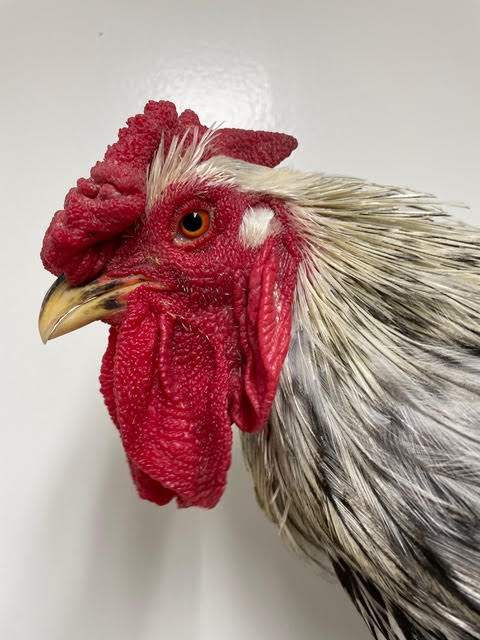
Dubba, an intelligent and beloved former resident at Chicken Run Rescue
Over the past hundred years, our understanding of nonhuman animal cognition has undergone a dramatic shift. Animals are often considered mindless, driven solely by instinct and incapable of any depth of thought. This perception aligns with the belief that human intelligence is uniquely complex and that sentience, the ability to experience emotions, feel pain, and have self-awareness, is an exclusively human trait. However, recent advancements in the study of animal cognition challenge this view, revealing that animals do possess impressive mental cognition and sentience.
Surprising Cognitive Abilities of Farmed Animals
Many people are surprised by the cognitive abilities of animals raised for food. Check out these amazing facts that may change the way you think:
Chickens are capable of simple arithmetic1, show signs of empathy when their chicks are under distress2, can demonstrate self-control and basic time perception3, and can have distinct personalities, many of which can overlap with those found in humans4,5,6.
Cows show signs of pleasure when they master a task7, love to play8, can recognize family members and familiar individuals including humans and can learn to fear handlers who have handled them roughly9, and can have best friends10.
Fish have excellent long-term memories, develop complex traditions, cooperate with each other, form social bonds, and are capable of tool use11,12. Despite common beliefs, fish have pain receptors and show evidence of responding to pain and display reduced symptoms when provided pain relief13.
Pigs are capable of object discrimination, spatial learning and memory14, are playful and curious15, display sensitivity to human body cues and attention, and can engage in perspective-taking tasks, such as following a pointed finger to find food, like dogs16.
Cognitive Bias and Misunderstanding Animal Intelligence
Despite this growing body of evidence showing that animals possess mental complexity, a pervasive belief persists that animals operate only by instinct. This perception often stems from cognitive biases, where we judge animal intelligence by our own human standards. For example, animals capable of mimicking human speech like parrots, are often seen as more intelligent; while animals like chickens, who exhibit impressive referential communication skills involving at least 24 distinct vocalizations to convey information, are not.
Moral Contradictions in How We View Animals
As a result, many people underestimate the mental complexity of animals, particularly those used for food. Studies have shown that the more intelligent an animal appears, the less likely people are to support its mistreatment. On the other hand, animals who are perceived as less cognitively complex, like cows or chickens, are more likely to be seen as acceptable targets for exploitation. This dissonance creates a moral contradiction: people are less likely to harm intelligent animals but feel justified in causing suffering to those they perceive as “dumber.” Research shows that when people are confronted with the link between meat and animal suffering, they are more likely to deny the mental capabilities of animals raised for food.
The Gaps in Animal Cognition Research
One critical aspect often overlooked in debates about animal intelligence is the scientific gap in our understanding. While research into animal cognition has made great strides, it remains largely underdeveloped. This could be due to the fact that much of this research is funded by big agricultural corporations and institutes that may be biased to reach conclusions favorable to their interests. Therefore, the absence of evidence for certain cognitive traits in animals does not mean these traits do not exist; it may simply reflect a lack of sufficient unbiased funding, rather than a definitive conclusion. Many studies on farmed animals are also limited by poor welfare conditions. Stress, malnutrition, and poor living environments in factory farming can stifle their cognitive capacities. If we consider these factors, it becomes clear that farmed animals are likely far more intelligent and emotionally sophisticated than we often give them credit for.
The Ethical Implications of Animal Intelligence
The research on animal cognition makes it impossible to ignore the moral implications of our treatment of animals. If we accept that animals are capable of feeling pain, experiencing emotions, and engaging in complex thought, then the ethical justification for their exploitation dissolves. The cognitive abilities of animals should not be a justification for causing them harm; rather, due to proven intelligence and sentience, it should be the reason we treat them with respect, dignity, and compassion.
Hannah MilosBio:
Hannah Milos (she/her) has been vegan for over 6 years and a volunteer with CAA since 2022. She currently serves as Treasurer on the CAA Board of Directors. In her spare time, Hannah enjoys playing guitar, baking vegan treats, and spending time in nature.
Bibliography
Rugani, Rosa & Fontanari, Laura & Simoni, Eleonora & Regolin, Lucia & Vallortigara, Giorgio. (2009). Arithmetic in newborn chicks. Proceedings. Biological sciences / The Royal Society. 276. 2451-60. 10.1098/rspb.2009.0044.
Edgar, J. L., Paul, E. S., & Nicol, C. J. (2013). Protective mother hens: cognitive influences on the avian maternal response. Animal Behaviour, 86(2), 223–229. https://doi.org/10.1016/j.anbehav.2013.05.004
Hogue, Michèle-E., Beaugrand, J. P., & Laguë, P. C. (1996). Coherent use of information by hens observing their former dominant defeating or being defeated by a stranger. Behavioural Processes, 38(3), 241–252. https://doi.org/10.1016/S0376-6357(96)00035-6
Gosling, S. D., & John, O. P. (1999). Personality dimensions in nonhuman animals: A cross-species review. Current Directions in Psychological Science, 8(3), 69–75. https://doi.org/10.1111/1467-8721.00017
Gosling, S. D. (2008). Personality in Non-human Animals. Social and Personality Psychology Compass, 2(2), 985–1001. https://doi.org/10.1111/j.1751-9004.2008.00087
Marino, L., & Colvin, C. M. (2015). Thinking Pigs: A Comparative Review of Cognition, Emotion, and Personality in Sus domesticus. International Journal of Comparative Psychology, 28. https://doi.org/10.46867/ijcp.2015.28.00.04
Hagen, K., & Broom, D. M. (2004). Emotional reactions to learning in cattle. Applied Animal Behaviour Science, 85(3-4), 203–213. https://doi.org/10.1016/j.applanim.2003.11.007
Burghardt, G. M. (2015). Creativity, Play, and the Pace of Evolution. Animal Creativity and Innovation, 129–161. https://doi.org/10.1016/b978-0-12-800648-1.00005-x
Hötzel, M. J., Machado Filho, L. C. P., & Dalla Costa, O. A. (2005). Behaviour of pre-parturient sows housed in intensive outdoor or indoor systems. Pesquisa Agropecuária Brasileira, 40(2), 169–174. https://doi.org/10.1590/s0100-204×2005000200010
McLennan, K. M. (2013) Social bonds in dairy cattle: the effect of dynamic group systems on welfare and productivity. Doctoral thesis. The University of Northampton. http://nectar.northampton.ac.uk/6466/ NE
Bshary, R., Wickler, W., & Fricke, H. (2001). Fish cognition: a primate’s eye view. Animal Cognition, 5(1), 1–13. https://doi.org/10.1007/s10071-001-0116-5
Brown, C., Krause, J., & Laland, K. N. (2011). Fish cognition and behavior. Chichester, West Sussex, Uk ; Ames, Iowa: Wiley-Blackwell.
Sneddon, L. U., Braithwaite, V. A., & Gentle, M. J. (2003). Novel object test: examining nociception and fear in the rainbow trout. The Journal of Pain, 4(8), 431–440. https://doi.org/10.1067/s1526-5900(03)00717-x
Held, S., Baumgartner, J., KilBride, A., Byrne, R. W., & Mendl, M. (2004). Foraging behaviour in domestic pigs (Sus scrofa): remembering and prioritizing food sites of different value. Animal Cognition, 8(2), 114–121. https://doi.org/10.1007/s10071-004-0242-y
Martin, J. E., Ison, S. H., & Baxter, E. M. (2015). The influence of neonatal environment on piglet play behaviour and post-weaning social and cognitive development. Applied Animal Behaviour Science, 163, 69–79. https://doi.org/10.1016/j.applanim.2014.11.022
Nawroth, C., Ebersbach, M., & von Borell, E. (2013). Are juvenile domestic pigs (Sus scrofa domestica) sensitive to the attentive states of humans?—The impact of impulsivity on choice behaviour. Behavioural Processes, 96, 53–58. https://doi.org/10.1016/j.beproc.2013.03.002
Minnesota continues to punch above its weight for vegan-friendly restaurant options. For sheer variety and quality, Minnesota has strong offerings and consistency compared to bigger markets that have high restaurant turnover or favor quantity over quality.
Let’s take a look at places that have unique offerings and are off the beaten path, the likes of which you won’t find in other cities and speak to how great Minnesota food culture is.
Twin Cities Restaurant Favorites
Both Minneapolis and St. Paul continue to have a solid repertoire of vegan and vegan-friendly restaurants, and a number of suburbs have also upped their game. Between Francis, HEA MPLS,, The Herbivorous Butcher, Herbie Butcher’s Fried Chicken, J. Selby’s, Lulu EthioVegan, Reverie Cafe + Bar, Trio, and the remaining Vegan East outlet, we’re well-covered for purely vegan options. Vegetarian stalwarts like Hard Times, Seward Cafe, Thanh Luong and Nala’s Kitchen, among others, help round things out.
But what about places that are simply vegan-friendly? I am continually impressed by the array of high-quality and unusual vegan options we can find throughout Minnesota. These are some of my personal favorites with my reasons.
Channa Kitchen, which only serves takeout, focuses on Indo-Trinidadian food and fills a void now that Harry Singh’s is closed. Get their doubles (a roti-based street food), alloo pies, and roti with curry.
The Himalayan is a bustling and homey Nepalese restaurant that won the Twin Cities Vegan Chef Challenge in 2024 with its now-permanent challenge dish Jackfruit Tikka Masala.
The Hyderabad Grill has a few locations in the Twin Cities and offers reliable, tasty North- and South-Indian staples, with all vegan items labeled.
Jasmine 26, a longtime Eat Street staple, recently brought back many of its old menu items alongside new hot pot options. Stop by for a hearty meal and a good drink in a family-run spot.
Lake & Bryant Cafe is a quaint neighborhood cafe with a chef-driven, eclectic menu with influences from Latin America, the Middle East, and Asia. Try their standout dishes such as the Garam Masala Tofu Scramble, extremely spicy noodles and garbanzo & kale stew. Their housemade chai features an authentic Indian recipe that can be made vegan with either almond or oat milk and is never too sweet for my taste.
Mandalay Kitchen in St. Paul is one of the only Burmese restaurants in Minnesota and its sheer variety of vegan options, and consistent quality, make it a go-to for anyone looking for food that’s simultaneously familiar, yet also unique from other South and Southeast Asian cuisines.
Muddy Tiger in Edina offers Vada Pav (pronounced “wuddah pow”), a street food staple of the state of Maharashtra in India. It’s a fried potato dumpling on a bread roll, seasoned with savory spices and sauces, and the rendition here is as good, if not better, than what you’ll find in Mumbai and Pune (the two largest cities in Maharashtra).
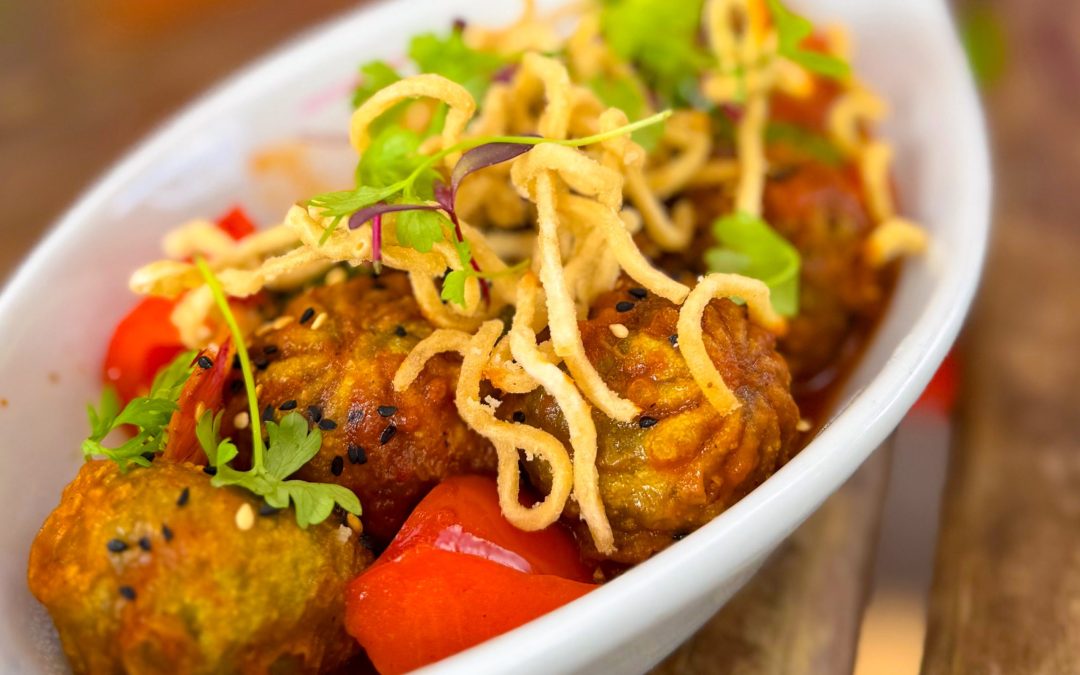
Rainbow Chinese fills a niche as a longtime community staple and chef-driven Chinese spot. Expect unusual and creative dishes. Many dishes can be modified to be vegan. For the single best preparation of mock duck in the city, get the Mock Crispy Tiger — a delectable mix of wok-seared mock duck, green onion, and taro chips.
Rincon Mexicano in Inver Grove Heights has the best vegan tacos in the Twin Cities, with an array of mock meats and fresh sides. The veggie chorizo tacos, and soy meat tacos, are both excellent, simple and cheap. Pro tips: this restaurant is closed on Saturdays, and is not to be confused with Taqueria El Rincon one block away.
Uffda Donuts in Maple Grove started offering vegan donuts on Thursdays and Sundays. These are easily the best raised (yeast) vegan donuts in the Upper Midwest, and you’ll find an array of flavors. Get there early before they sell out or preorder.
Duluth and The North Shore
Whenever I go up north, I’m always impressed by the food options. Try these in the Duluth/North Shore area:
Dovetail Cafe has the best vegan breakfast options in Duluth and has great baked goods, tea, and coffee in a cabin-like environment.
Juice Pharm is the only fully vegan restaurant in Duluth. I enjoy the juices and snacks offered in this earthy spot.
Lilly’s Asian Cafe is a family-run Southeast Asian restaurant in Two Harbors. Both tasty and welcoming, it’s a nice break on the drive to the Boundary Waters.
Thai by Thai in Duluth is an old-school Thai restaurant serving fresh and savory dishes downtown.
Zeitgeist Restaurant & Bar in Duluth offers a lovely, upscale dining experience run by a nonprofit. Their vegan scallops (mushrooms), stick-to-your-ribs vegan curry, and superb vegan banh mi are worth the trip.
St. Cloud Area
Jules’ Bistro has fresh, creative options (think bowls, salads, and soups) including vegan baked goods.
The Local Blend in St. Joseph is a throwback coffee shop with vegan mac and cheese and great vibes.
The White Horse offers homemade and labeled vegan items including a burger and pasta dishes.
Minnesota’s Plant-Based Scene Shines Bright
Minnesota’s plant-based food options remain strong and varied around the state and especially in the Twin Cities. More importantly, they are high-quality and thoughtful, borne of a food culture committed to integrity and creativity.